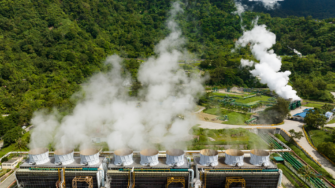
California stands at a clean energy crossroads. To achieve 100 percent clean electricity by 2045 — as required by law — the state will of course need more wind, solar, and battery storage, but that’s not all. Next-generation geothermal energy is a compelling, 24/7/365, clean energy source that can support the electrical grid around the clock. However, deploying this resource with appropriate social and environmental safeguards in California requires navigating a complex web of technical, financial, and regulatory hurdles.
Recent technological advances mean geothermal development is no longer limited to hydrothermal hotspots. Geothermal development also promises massive economic opportunities, including high quality jobs for former oil and gas workers.
This webinar brought together state leaders, policy analysts, and other stakeholders to explore how California can unlock the potential of next-generation geothermal to build a cleaner, more reliable, and more resilient electricity grid. Our discussion covered how to navigate regulatory processes while upholding social and environmental standards, grid interconnection, and how to “de-risk” the exploration phase and attract institutional investment.
Lead Commissioner on Geothermal Energy, California Energy Commission
Noemí Gallardo is serving her first term on the California Energy Commission. She was appointed by Governor Gavin Newsom in February 2023 to serve as the CEC’s attorney member. She is the first Latina appointed as a CEC commissioner.
Gallardo joined the CEC in 2019 as its Public Advisor. She later became chief of staff for CEC Chair David Hochschild.
Max Wilmarth is a geologist who has spent the last 20+ years working in geothermal exploration, development, and operations across six continents.
His career has ranged from field geology and early-stage exploration to executive leadership roles overseeing technical teams, resource strategy, drilling support, and development decisions for geothermal projects around the world. He currently serves as Chief Technology Officer of Open Mountain Energy.
Ann Garth is the Policy Manager for the Superhot Rock Geothermal program at Clean Air Task Force (CATF). She develops and advocates for policies to promote next-generation geothermal, including superhot rock geothermal – working towards efficient, safe, and widespread adoption of this transformational energy source. Her work includes initiatives at the U.S. federal and state levels, and she also leads CATF’s research into the social science of geothermal energy.
Chairman Jose “Moke” Simon III of the Middletown Rancheria of Pomo Indians of California serves as a prominent advocate for tribal sovereignty, self-determination, and direct government-to-government communication in the development of geothermal energy. Because the Middletown Rancheria is located in Lake County, a region deeply tied to The Geysers, the world’s largest geothermal field in terms of electricity generation, Chairman Simon acts as a critical bridge between Indigenous communities, state regulators, and clean energy developers.
Alyssa Goodstein is an award winning communications strategist, climber, yogi, meditator and former academic (Altac) / History Ph.D. student who transitioned to the political and advocacy world after graduating from UCLA and the University of Chicago.
Her work allows her to shape conversations and narratives to dismantle the widespread acceptance of economic inequality in the U.S. Throughout her studies, her primary interest was to understand the adoption of neoliberal policies at the expense of the masses, especially informal workers, in Latin America.
Woody Hastings is an energy and environmental policy analyst, strategic planner, and community organizer with over 30 years of experience in the non-profit, governmental, and private sectors.
We use cookies to optimize our website and our service.
Functional
Always active
The technical storage or access is strictly necessary for the legitimate purpose of enabling the use of a specific service explicitly requested by the subscriber or user, or for the sole purpose of carrying out the transmission of a communication over an electronic communications network.
Preferences
The technical storage or access is necessary for the legitimate purpose of storing preferences that are not requested by the subscriber or user.
Statistics
The technical storage or access that is used exclusively for statistical purposes.The technical storage or access that is used exclusively for anonymous statistical purposes. Without a subpoena, voluntary compliance on the part of your Internet Service Provider, or additional records from a third party, information stored or retrieved for this purpose alone cannot usually be used to identify you.
Marketing
The technical storage or access is required to create user profiles to send advertising, or to track the user on a website or across several websites for similar marketing purposes.