
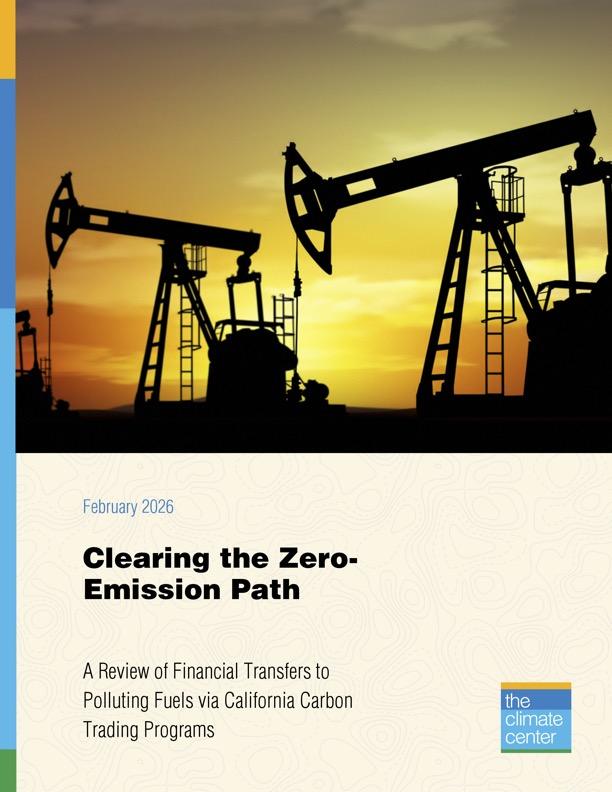
This report reveals how California’s carbon trading programs funneled $27.8 billion to oil companies and biofuel suppliers from 2013 to 2024.
Both the Cap and Trade program and the Low Carbon Fuel Standard have the stated purpose of reducing greenhouse gas emissions and helping California meet its statutory climate goals. In reality, our analysis shows that both programs incentivized continued reliance on fossil fuels and contributed to “carbon lock-in,” delaying the necessary transition to zero-emission vehicles and public transit.
Key findings:
From 2013 to 2024, California transferred $27.8 billion to combustion fuel producers, including:
- $8.64 billion through free Cap and Trade allowances to oil refiners and drillers
- $19.17 billion through Low Carbon Fuel Standard credits to biofuel suppliers
Over the same time period, $27.8 billion could have funded:
- The installation of 2.8 million level-two EV chargers to serve roughly 11 million Californians
- Free public transit statewide for 12 years, $11 billion left for service improvements and transit electrification
- Complete job transition support for California’s oil workers, with some $15 billion left over
Related resources

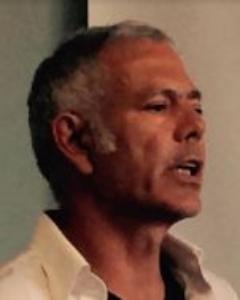
Greg Karras
Principal, Community Energy reSourceGreg Karras is a Principal at Community Energy reSource. Community Energy reSource offers independent pollution prevention, environmental justice, and energy systems science for communities and workers on the frontlines of today’s climate, health, and social justice crises.
He has extensive experience, knowledge, and expertise in the energy manufacturing sector, including petroleum refining, and in particular the refineries in the State of California. He has served as an expert for CBE and other non-profit groups in efforts to prevent pollution from oil refineries; to assess environmental health and safety impacts at refineries; to investigate alternatives to fossil fuel energy, and to improve environmental monitoring of dioxins and mercury. He has also served as an expert for the City/County of San Francisco and local groups in efforts to replace electric power plant technology with reliable, least-impact alternatives.

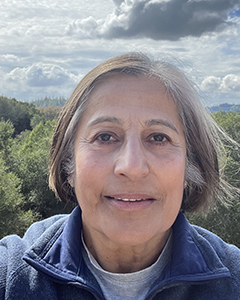
Jasmin Ansar
Former Senior Climate Researcher, The Climate CenterDr. Jasmin Ansar joined The Climate Center in September of 2022 as a Senior Climate Researcher to research and develop optimal policies to address the climate change emergency at speed and scale. Dr. Ansar is an economist who began her career as a professor and has been employed in both the private and public sectors. She has been a Climate Economist at the Union of Concerned Scientists and worked on designing and advocating for effective global warming policies with particular emphasis on proposals in California. Dr. Ansar has taught Economics at the City University in London, Lorry I. Lokey Graduate School of Public Policy and Business, Mills College in Oakland, the Presidio Graduate School in San Francisco, UC Berkeley, and the University of British Columbia. Dr. Ansar has a Ph.D. in Economics from the University of Southampton, England, a Diploma/MSc. in Econometrics and Economics from the University of Southampton, England, and a B.A. in Economics with Mathematics from Sussex University, England.
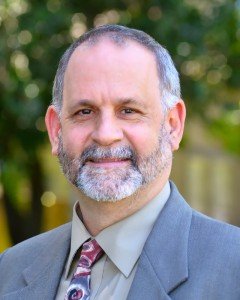
Woody Hastings
Phase Out Polluting Fuels Program DirectorWoody Hastings is an energy and environmental policy analyst, strategic planner, and community organizer with over 30 years of experience in the non-profit, governmental, and private sectors.