

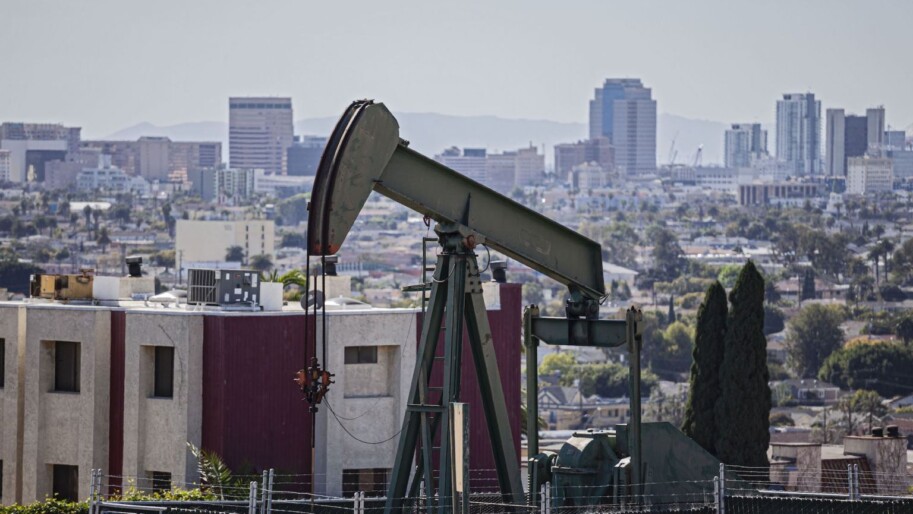
California’s status as a top oil-producing state has long been at odds with our reputation for environmental leadership. As the consequences of burning fossil fuels have become clear and clean energy becomes more economically competitive, oil production has declined since the 1980s. But the geographic divide is stark and the industry isn’t going down without a fight.
This summer, that fight is coming to a head.
First, the good news. In June, the Los Angeles City Council voted unanimously to halt all new oil drilling and phase out existing wells within the city. If that sounds familiar, it’s because the city approved a similar measure in 2022 that was later struck down by a judge. Since then, the state enacted AB 3233 (Addis) — supported by The Climate Center — which reaffirms local government authority to regulate oil and gas drilling.
Thanks to the organizing of groups like STAND LA, Los Angeles is now back on track to become the largest city in the United States to phase out oil drilling!
While our neighbors in Los Angeles are on the verge of a major victory, the Central Coast and Central Valley are experiencing the opposite. Last month, the federal Bureau of Land Management opened more than 1 million acres of public land to new drilling (850,000 in the Central Valley and 680,000 along the Central Coast). That includes areas close to a high school, a public park, and a reservoir that serves 250,000 people with drinking water.
Kern County is already home to roughly 80 percent of California’s oil and gas wells and has some of the most polluted air in the nation. Meanwhile, Santa Barbara communities are also opposing the reopening of an offshore oil pipeline that’s responsible for one of the largest spills in state history.
We can’t accept sacrifice zones anywhere in our state. None of us are safe from the destructive impacts of oil and gas pollution until all of us are safe. That’s why it’s critical to do everything we can to erode Big Oil’s political power in Sacramento and hold the industry accountable.
Right now, we’re supporting SB 1259 (Blakespear), the Refinery Transparency Act, to make sure fossil fuel corporations are held responsible for refinery cleanup costs instead of taxpayers. Join me in taking action to support SB 1259 and together we can build a California beyond fossil fuels!
This blog first appeared in The Climate Center’s bi-weekly newsletter. To keep up with the latest climate news and ways to take action for a climate-safe future, subscribe today!