

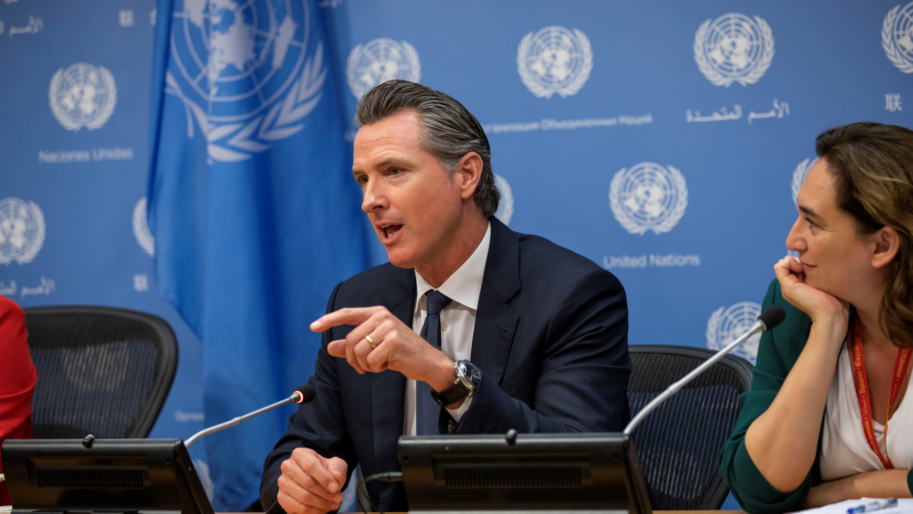
As Governor Gavin Newsom eyes the 2028 presidential race, he has consistently stood up to Trump’s attacks on California’s environmental laws and positioned himself as a climate leader on the world stage. However, as I explained in my latest op-ed in CalMatters, Newsom recently vetoed three bipartisan bills that would have cut climate pollution and saved Californians money.
The bills would have advanced virtual power plants (VPPs) — networks of existing, local, clean energy assets like rooftop solar, home and electric vehicle batteries, and smart thermostats that can deliver power back to the grid when needed most. VPPs reduce demand for polluting gas power plants and more expensive infrastructure upgrades, like new transmission lines.
Unfortunately, investor-owned utilities like PG&E continue to work against these cost-effective, clean electricity solutions. Why? Simply put, they profit more by building more infrastructure.
I am personally grateful to Governor Newsom. On his watch, our state has achieved emissions cuts with sustained economic growth and set a standard for clean car rules that has been adopted around the world. Newsom also just signed a bill that extended and reformed the nation’s first economy-wide “Cap and Invest” program to cut climate pollution, which our team at The Climate Center played a key role in passing.
However, these achievements do not give him cover for rejecting local clean energy solutions that save Californians money.
Affordable, clean power is a winning electoral issue, as we’ve seen in other parts of the country. Voters want clean energy solutions that lower electricity bills and build resilience to wildfires, floods, and other extremes.
We have the solutions. We just need the political will to implement them. With one year left in office, Governor Newsom can make electricity more affordable and climate-friendly. Join me in asking Governor Newsom to accelerate the adoption of affordable, clean energy, a fossil fuel phase-out, and nature-based climate solutions.
This blog first appeared in The Climate Center’s bi-weekly newsletter. To keep up with the latest climate news and ways to take action for a climate-safe future, subscribe today!